
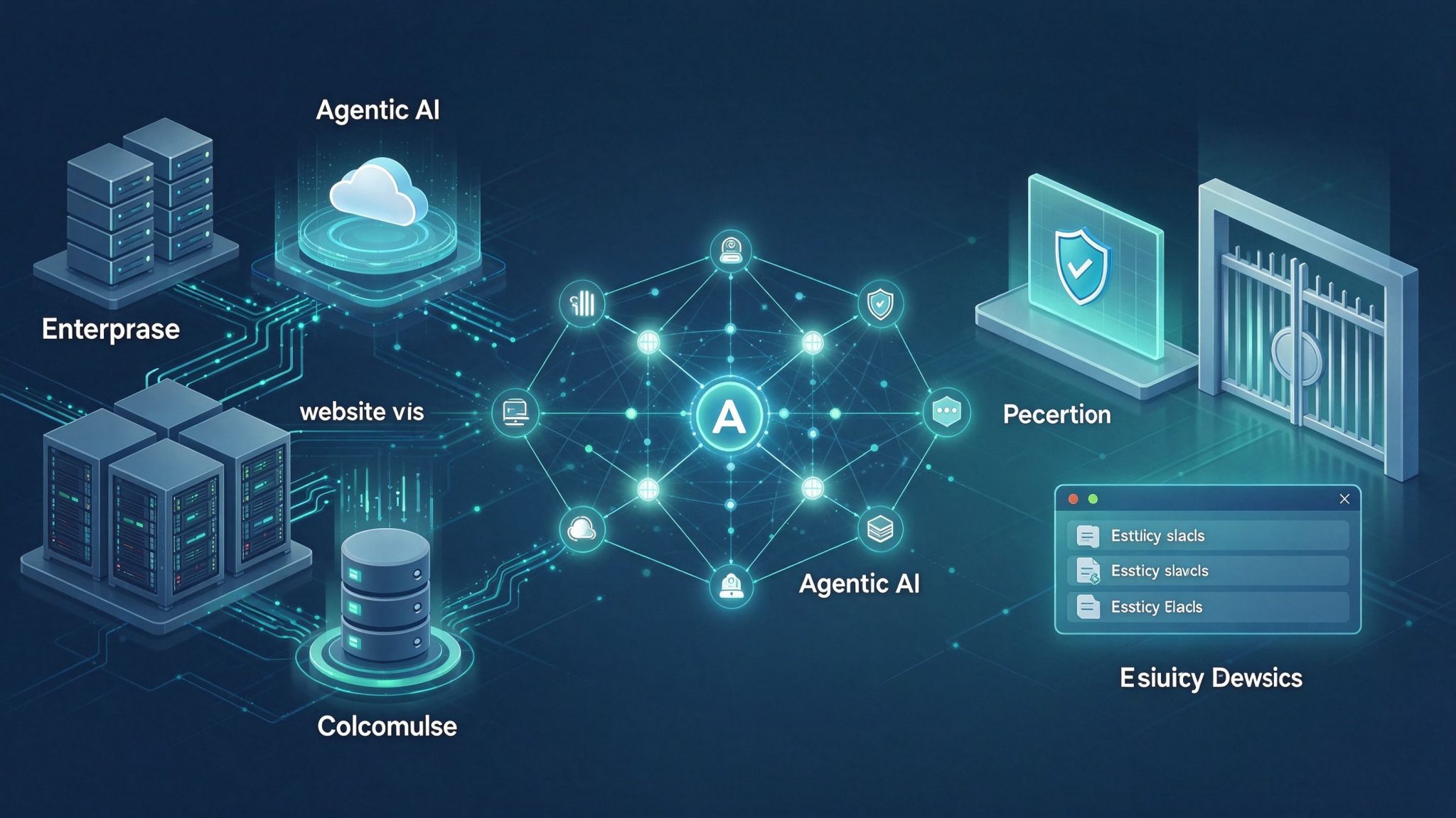
How can enterprise IT infrastructure and security adapt in the era of Agentic AI Agents
The Rise of Agentic AI: The Next Transformation for Enterprise IT Infrastructure, Operations & Cybersecurity
With the rapid rollout of multi-agent AI systems, the focus of enterprise digital transformation in 2026 has shifted from conversational AI to autonomous agents that can complete tasks independently. AI agents can automatically handle resource allocation, troubleshooting, log analysis and vulnerability scanning, easing repetitive workloads for IT teams. Meanwhile, new risks such as AI-powered attacks, machine identity governance and poor visibility across hybrid cloud environments have become top concerns for CIOs.
1. Industry Trend: AI Agents Moving from POC to Production
According to Gartner and CNCF, organisations are integrating AI agents into IT operations, cloud management and security response workflows to build the autonomous enterprise. Unlike traditional AI copilots, agentic AI can break down objectives, call tools and finish end-to-end workflows, bringing clear value in cloud-native infrastructure, server monitoring, website SLA assurance and log alerting.
However, the industry consensus is clear: automation does not mean unrestricted autonomy. Agents without guardrails, audit trails and permission isolation will raise risks of data leakage, misconfiguration and lateral movement.
2. Three Key Pain Points for Enterprises
- Poor visibility across hybrid & multi-site stacks: On-prem servers, VPS, public cloud and multi-domain websites create alert fatigue, slow root-cause analysis and high MTTR;
- New AI-native cyber threats: Adversaries use large models to discover vulnerabilities, generate phishing and malware at scale. The old patch cycle is too slow for hour-scale threat evolution;
- Integration barriers with legacy systems: Many SME websites, ERP and business systems lack standard APIs. Direct agent deployment may lead to privilege escalation and untraceable actions.
3. Our Approach: Controlled, Auditable, Stability-first Intelligent IT Operations
As a professional IT infrastructure and digital services provider, we avoid hype-first AI deployment. We follow a guardrail-first roadmap:
- Build solid observability first: unify metrics from servers, Nginx/Apache, databases, 404 tracking, access logs and firewall alerts;
- Apply permission tiers for AI agents: limit auto-actions to low-risk, rollbackable tasks (alert triage, diagnosis, reporting). High-risk changes require manual approval;
- Enforce zero trust, machine identity governance and regular penetration testing. All agent actions are logged and auditable;
- Iterate gradually: start with mature use cases such as uptime monitoring, sitemap management, backup and malicious traffic blocking before expanding into business automation.
4. Recommendations for SMEs
Hong Kong SMEs are advised to avoid large-scale autonomous agent deployment at the early stage. Prioritise asset inventory, threat monitoring and backup & recovery. Use AI as an assistant rather than a decision-maker until your foundation is mature. Stability, control and recoverability remain the top priority for business IT.
Conclusion
Agentic AI is the core trend reshaping IT operations, development and cybersecurity. Governance and security are non-negotiable prerequisites for production adoption. When selecting an IT partner, businesses should evaluate not only cloud, server and web development capabilities, but also their understanding of emerging AI risks and control frameworks.
Contact us to assess intelligent operations and security upgrades for your existing servers, websites and cloud stack.